
Article Editor
Redesigning content creation for scale, quality, and flexibility
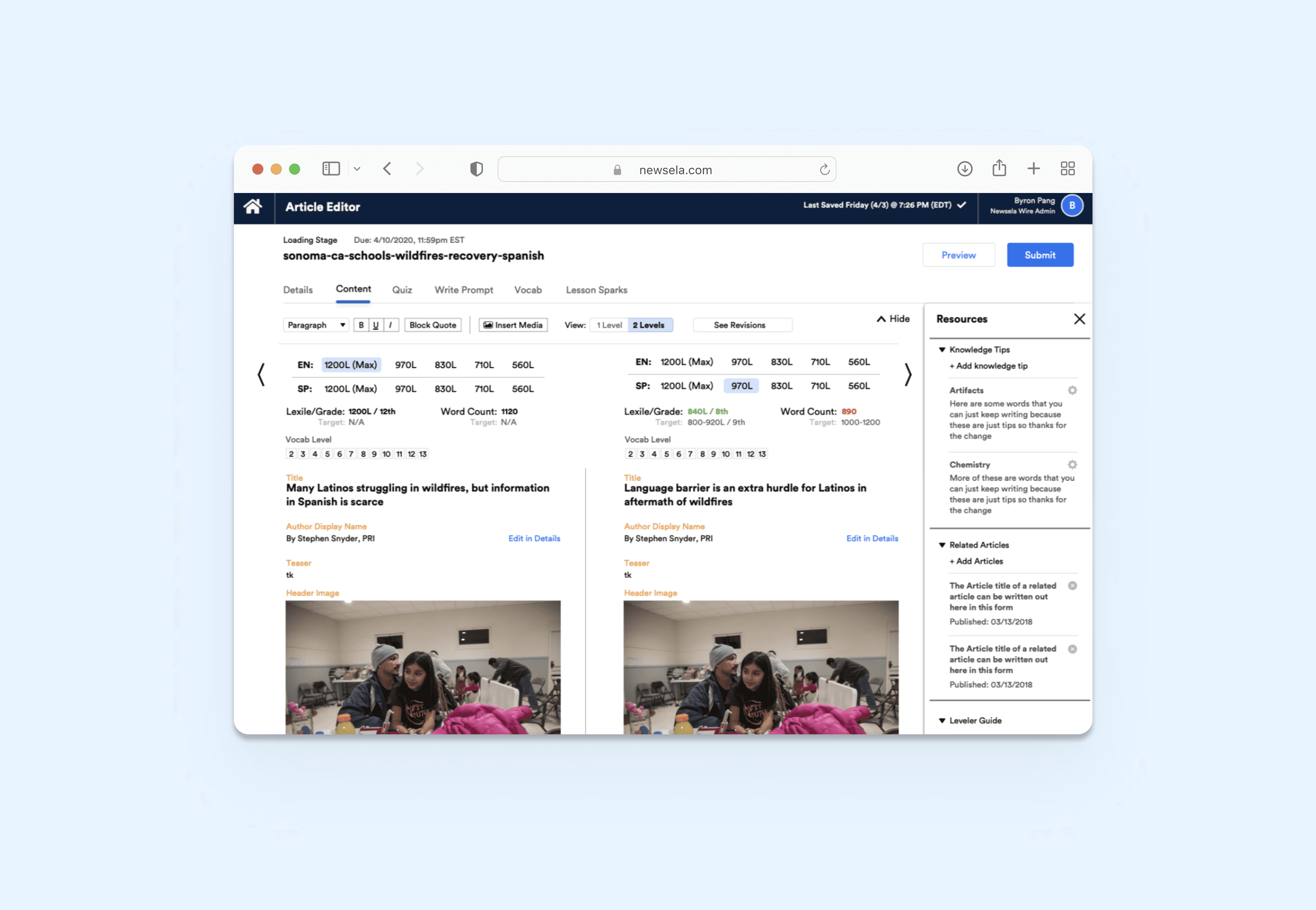
I led the redesign of Newsela’s internal article and assessment creation tools, consolidating fragmented workflows into a single, scalable editor. The result reduced content creation time by 23%, saved 40 minutes per article, delivered $368K in annualized cost savings, and enabled entirely new content capabilities—including standards-aligned tagging that contributed to increased sales through 2020.
CONTRIBUTIONS
Research strategy and execution
Problem framing and synthesis
End-to-end UX and interaction design
Iteration and validation with users
Design–engineering collaboration
Role
Solo product designer
Team
1 product manager
3 engineers
Timeline
2022
Problem
What does Newsela do?
Newsela’s mission is to make meaningful classroom learning accessible to every student. The company began by rewriting news articles across five reading levels to support differentiated instruction and later expanded into assessments, activities, and standards-aligned content.
The vision is to expand beyond news, to core curriculum content in subjects such as science, social studies, etc, and provide leveled assessments & attachments.
Opportunity gap
While the product offering evolved, the content creation tools did not.
Internally, content teams and contractors relied on a collection of legacy tools—each built for a narrow task—that no longer supported the scale, flexibility, or speed the business required.
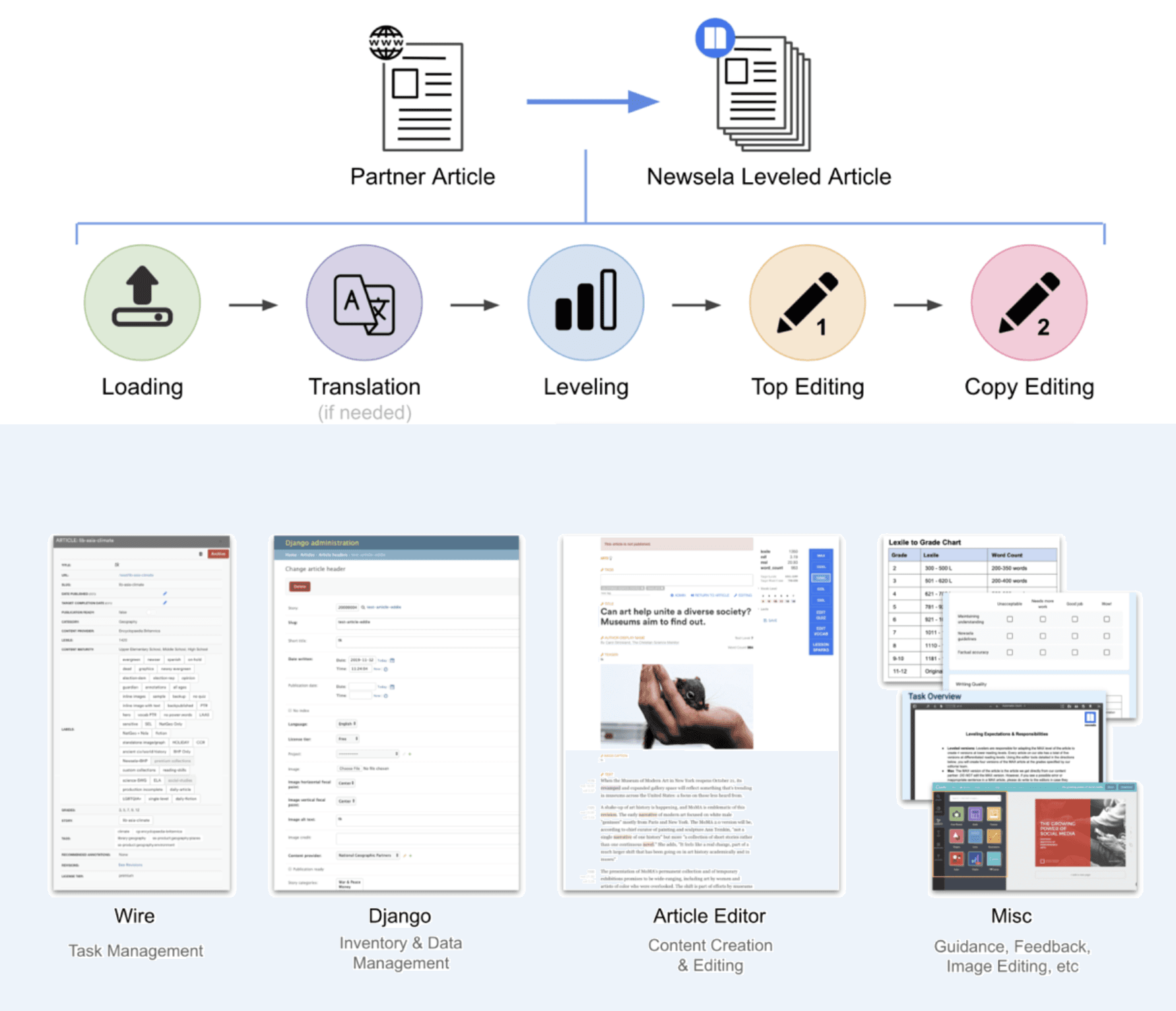
Users juggled multiple tools that were limited in functionality
User PROBLEM
Content creation relied on disconnected systems that forced users to
Constantly switch contexts between tools
Work within a single rigid article structure
Use manual workarounds for new content types
Reference external documentation to maintain quality
This increased cognitive load, slowed production, and made it difficult to evolve Newsela’s content strategy.
Why it matters
The current editor was a blocker in allowing Newsela to evolve with visionary company & content strategy - it increased cognitive load, slowed production, and was extremely limited.
A new editor is foundational to unlock Newsela's potential as a fully scalable educational platform.
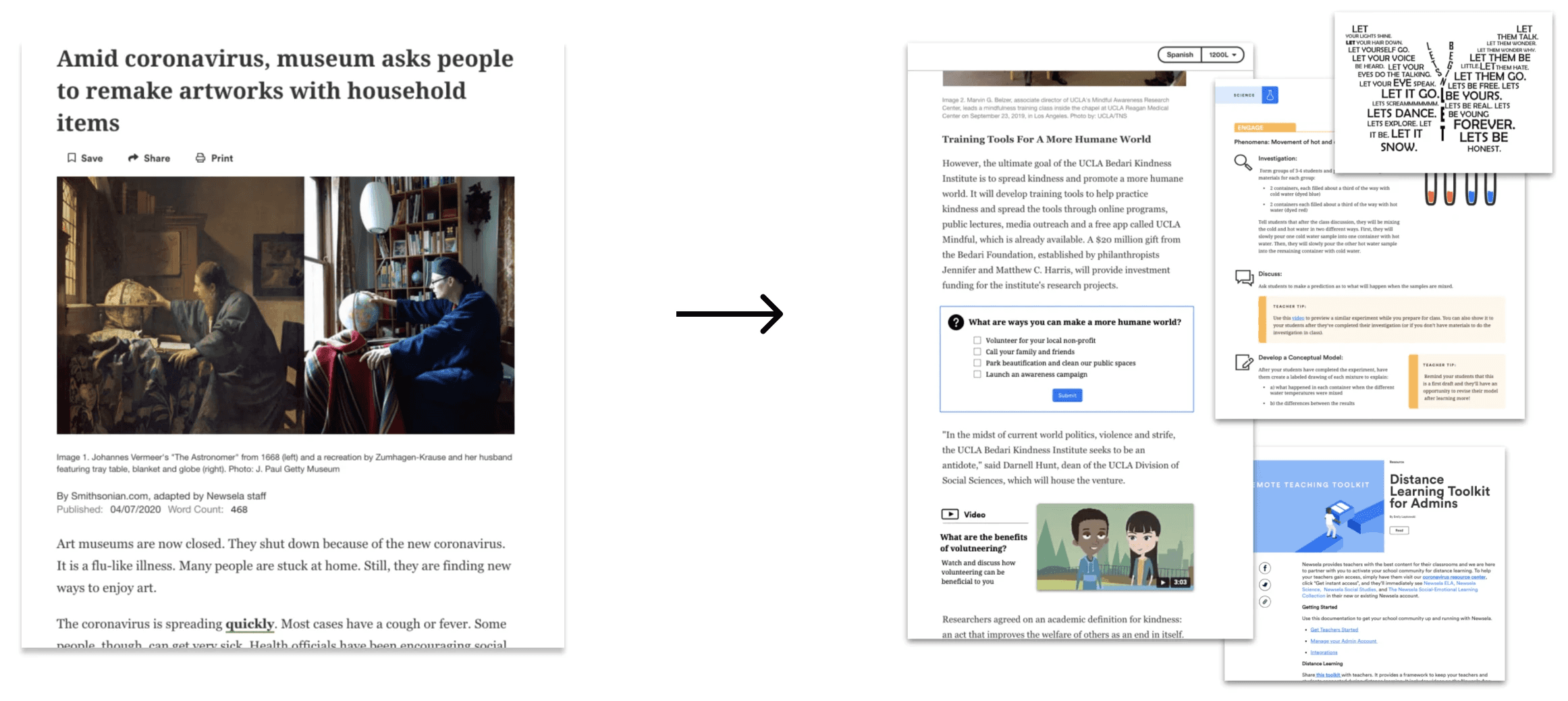
Expanding from a single article format to allow for articles tailored to various subjects
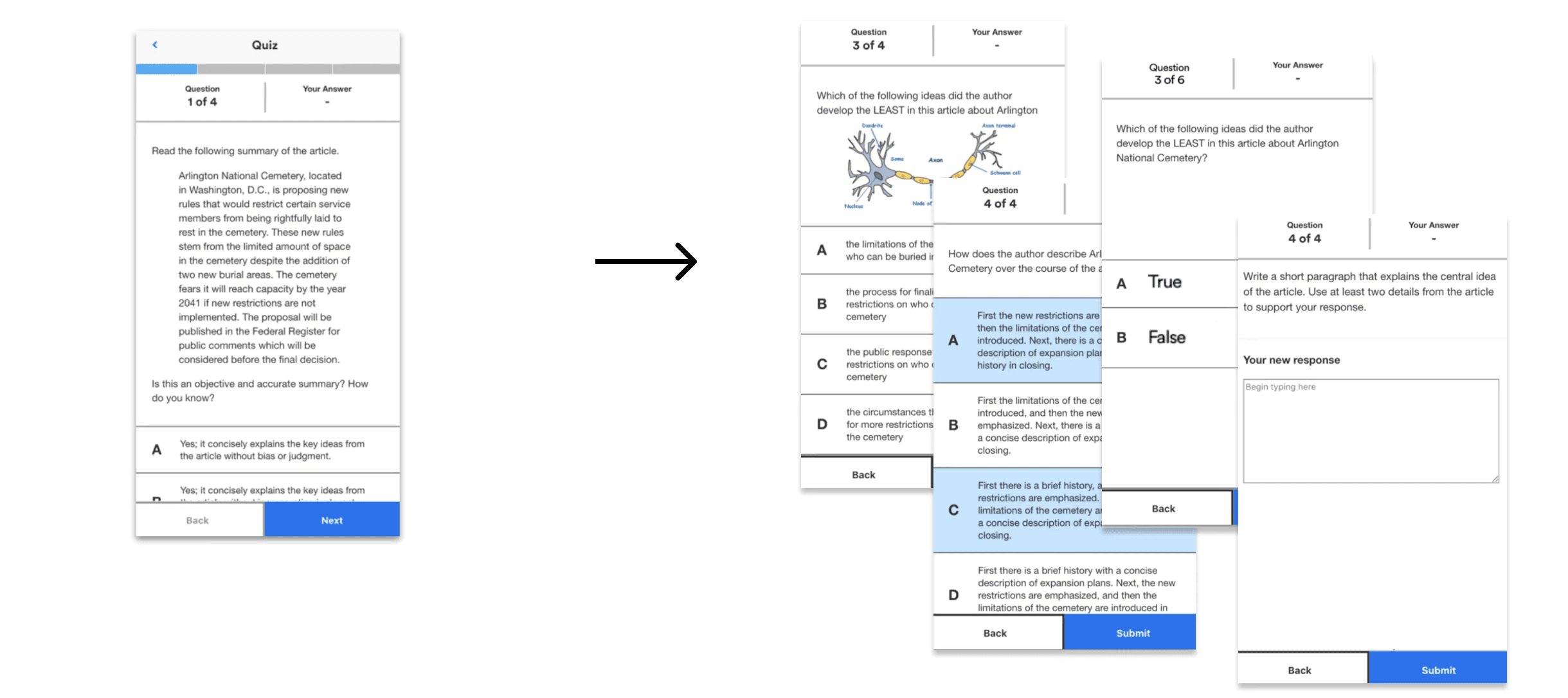
Assessments expanded as well as an improved creation process
Solution
Design challenge
How might we enable internal staff and contractors to efficiently create high-quality, evolving educational content—without sacrificing editorial standards or future flexibility?
This challenge required balancing:
Speed vs quality
Simplicity vs capability
Short-term constraints vs long-term system design
Goals & Contraints
The new article editor needed to enable article creators to craft engaging, quality content for students in a seamless & timely manner.
Goals
Reduce time spent creating articles and assessments
Enable new content types beyond a single template
Improve consistency and contributor confidence
Create a scalable foundation for future tools (including external use)
Constraints
Deep legacy system dependencies
Existing data models that could not be replaced immediately
No fixed deadline, but high architectural impact
Solution overview
A centralized content creation system that:
Consolidates article and assessment creation
Supports multiple layouts and content types
Enables side-by-side comparison across reading levels
Embeds guidance directly into the workflow
Scales from MVP to a full-featured platform
Article editor
A centralized, flexible authoring tool that enables creators to draft, compare, and edit multi-level articles in a single workflow—reducing context switching while preserving editorial accuracy and quality standards.
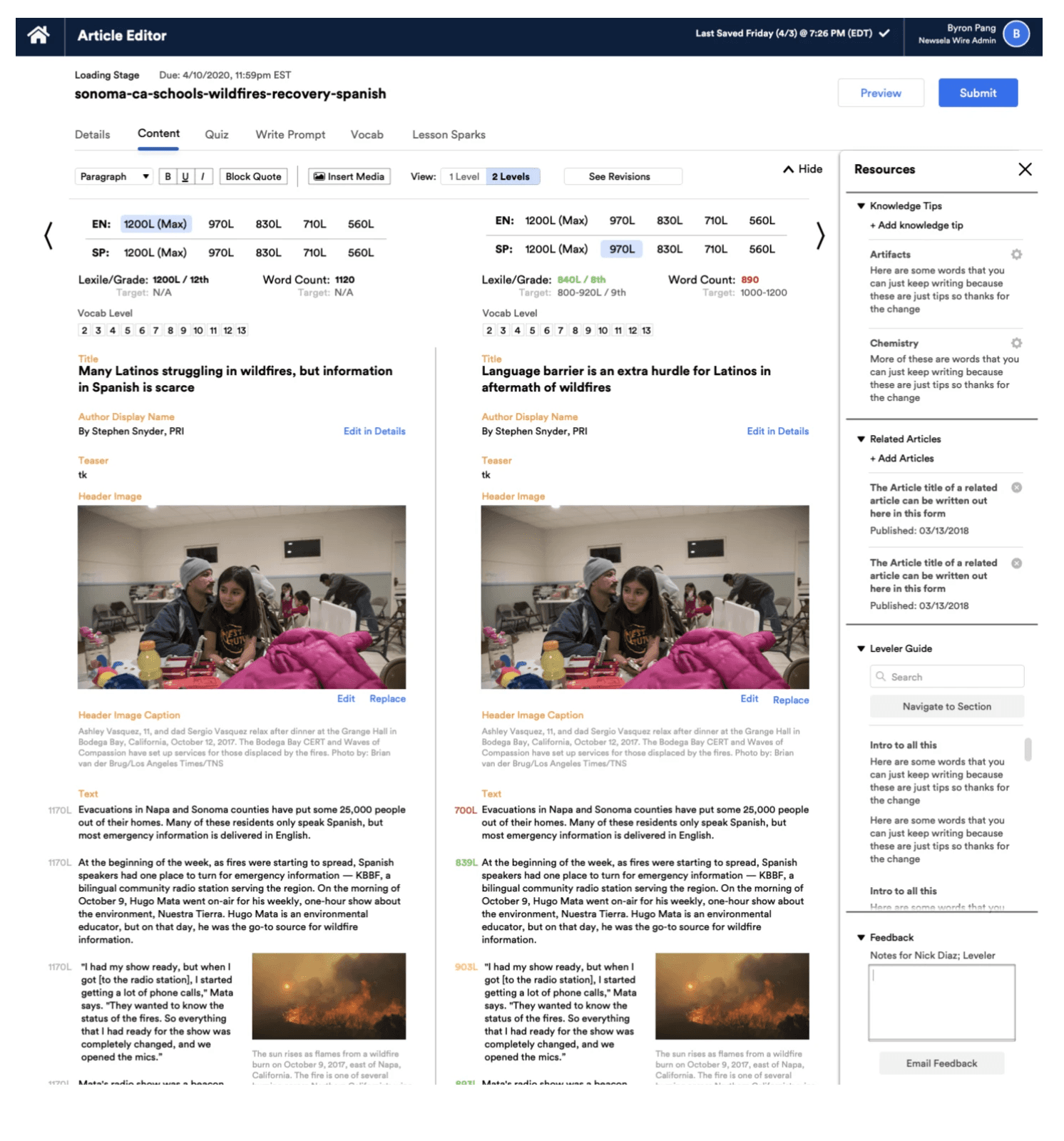
New article editor enables contextual editing and assessment creation
Assessment editor
A complementary tool designed to create and manage assessments alongside articles, allowing teams to build, align, and iterate on evaluative content using the same underlying system and design principles.
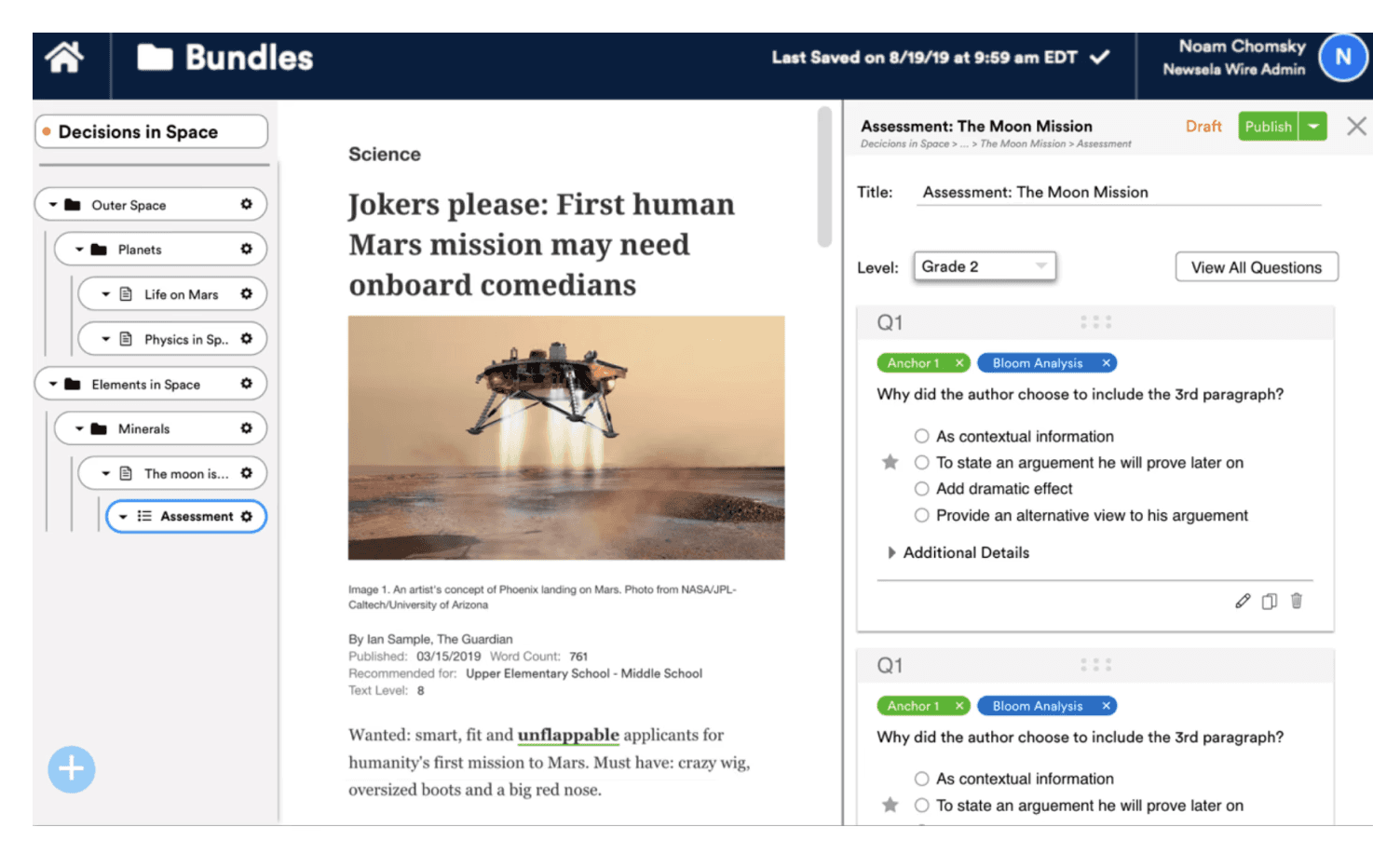
Assessment editor enable leveled quizzes & activities to be created
Holistic experience
Together, these tools establish a shared, extensible foundation for content creation—reducing operational friction while enabling future expansion into new formats and outward-facing use cases.
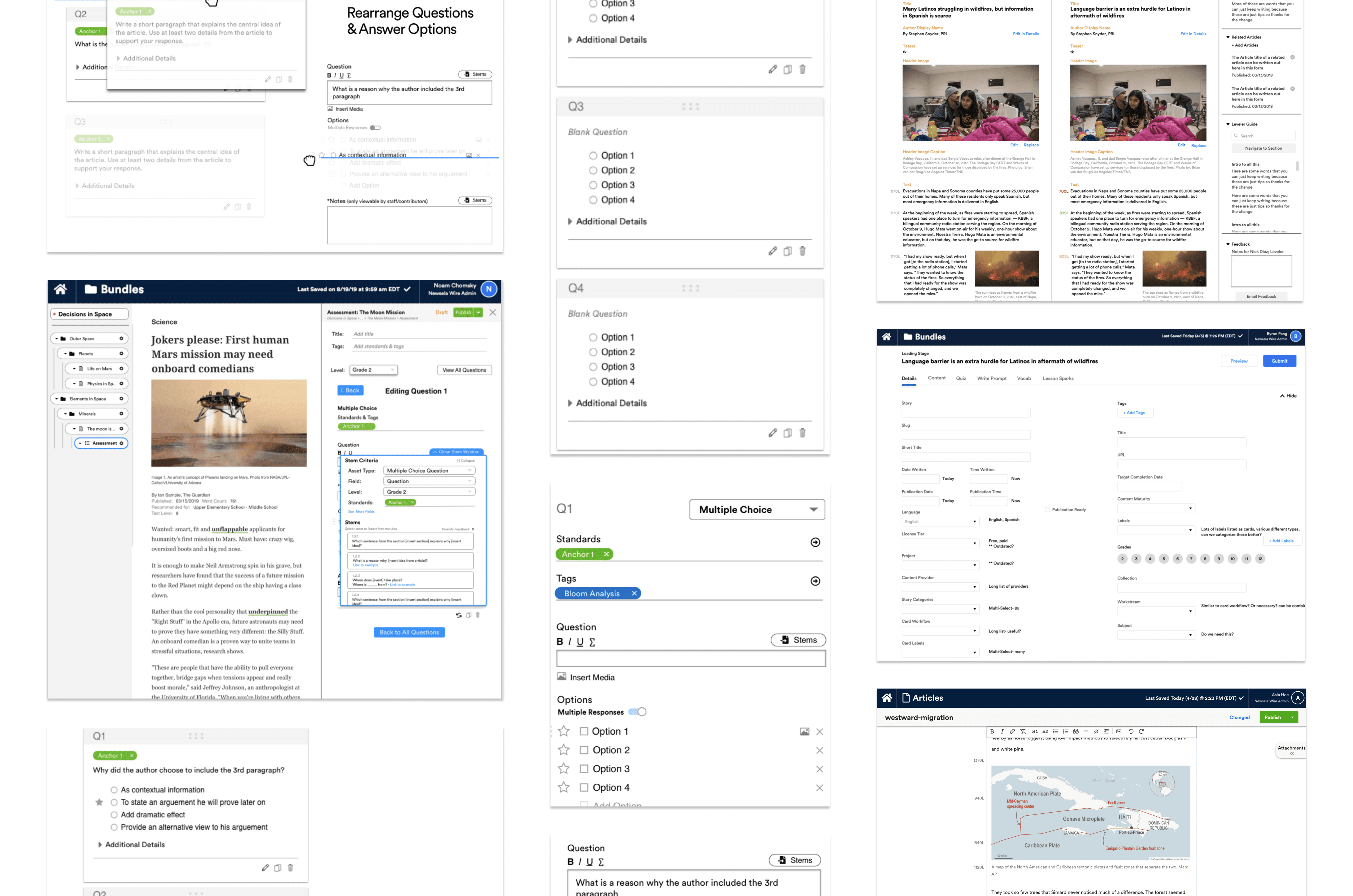
Improvements across all aspects of content creation
Impact & Outcomes
The changes to the article editor led to the following results:
Content creation time
23% reduction in content creation time; 40 minutes saved per content piece
Staff cost savings
$368,000 NPV
Content features
0 → 1 net new content features
From a business perspective, standards tagging led to tens of thousands of aligned content assets which was an essential selling point to school districts and directly contributed to increased sales through 2020.
Research
Goals
Basing design decisions & product priorities based on user research was essential for such a foundational platform.
The main goals were to create a core base of knowledge, identify key user needs & tensions, and maintain constant guidance throughout the design process.
Methods
We used the following methods to understand our users
Qualitative interviews with internal staff and contractors
“Day-in-the-life” shadowing across creation stages
Workflow mapping across all tools and roles
Analogous research on professional editing systems
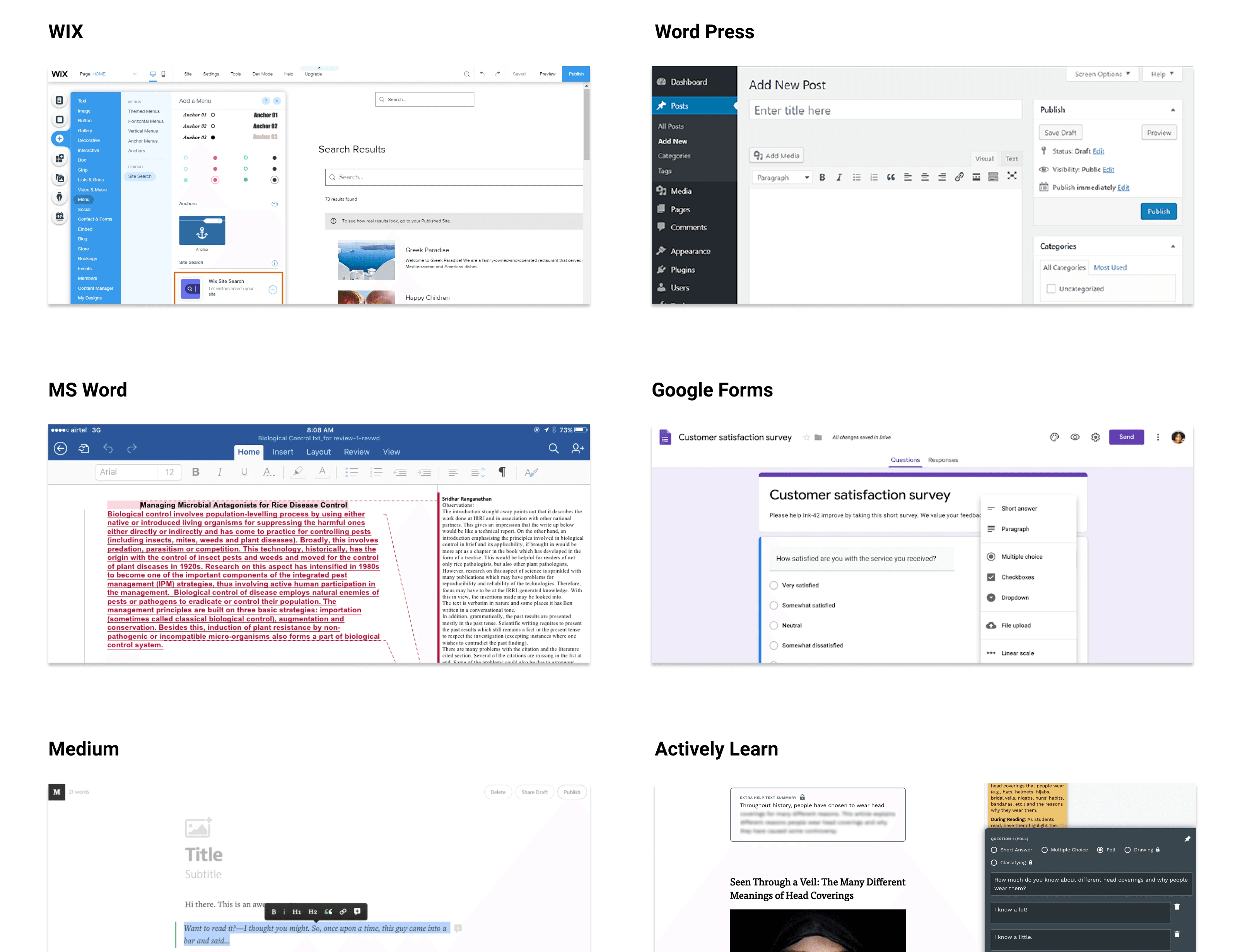
Analgous research on best practices across various editors
Key insights
Some essential findings that shaped the design direction
Users conceptualized content creation as a single flow, but tools forced artificial breaks
Comparative editing (side-by-side levels) was essential for accuracy and confidence
Rigid templates blocked experimentation and new content formats
Guidance was most effective when embedded in context, not externalized
Design process
Design principles
From research, three principles guided all decisions and used to evaluate tradeoffs throughout design and development:
Simplicity:
Reduce cognitive load across inherently complex workflows
Flexibility:
Treat content elements as composable units that can evolve with future needs
Consolidation:
Bring fragmented tooling into a single, coherent experience
Collaboration
Throughout the process I partnered closely with:
Product management for prioritization
Engineering for feasibility and tradeoffs
Education specialists to integrate learning science principles
Internal content creators as continuous research partners
User flow & Ideation
tk
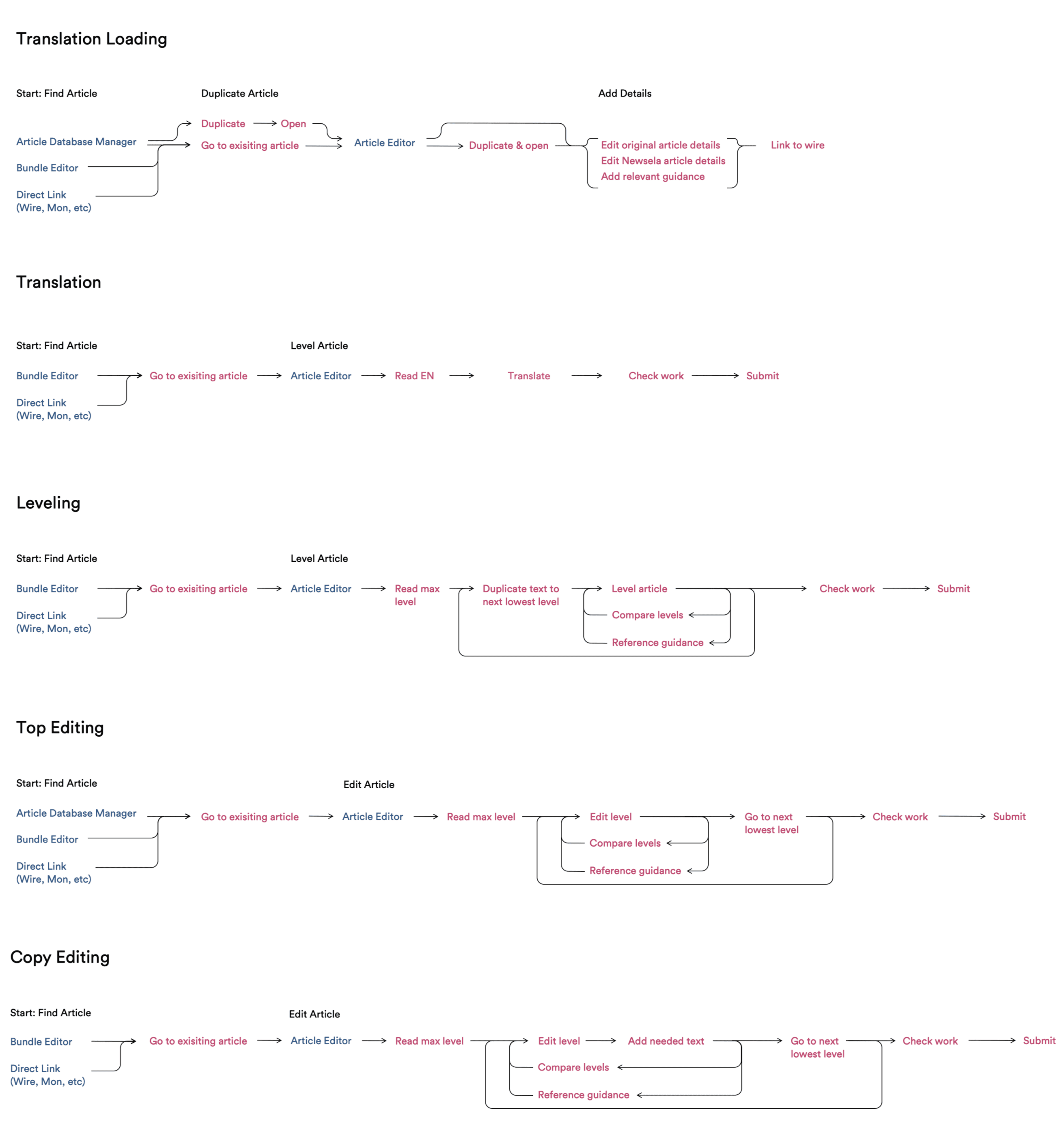
Breakdown of each stage of editing
Prototyping & Testing
Features that were critical were prioritized to be tested, as well as experiences that answered any unknown questions about user expectations.

Utilizing low fidelity prototypes to test
Design decisions
Some critical design decisions had to made through the process which shaped the direction of the product.
Comparative Editing as a First-Class Pattern
Users could view and edit two reading levels side by side while maintaining scroll position and context.
Tradeoff: Simplicity vs UI complexity.
Why it was worth it: Accuracy and speed during leveling outweighed the cost, with research strongly validating the need.
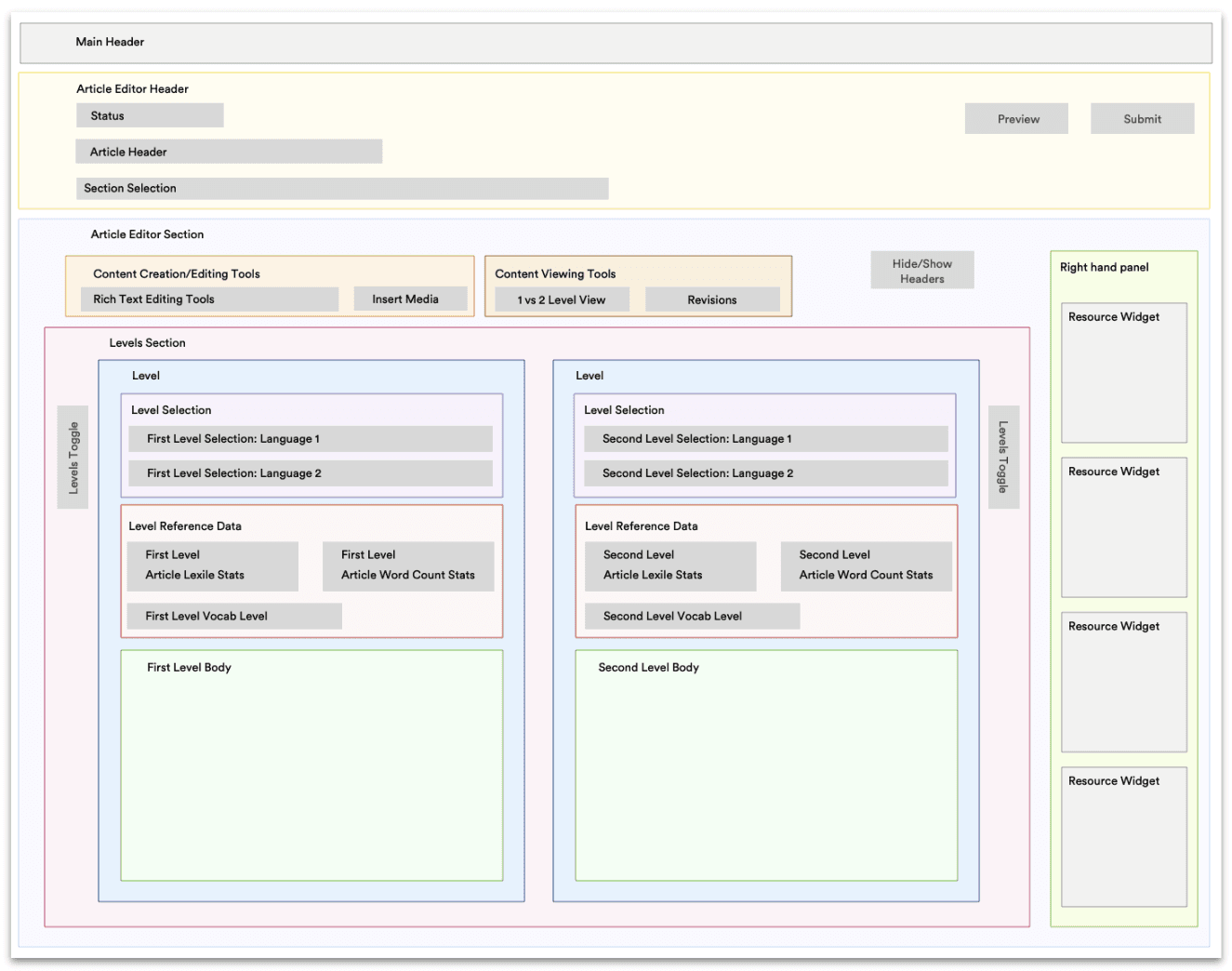
Iterative design to create a layout the enables comparison while editing
contextual Guidance for quality & consistency
Contributor guides, related articles, and feedback were surfaced contextually within the editor to ensure quality and consistency across various authors.
Impact: Reduced onboarding time and improved content quality without cluttering the interface.
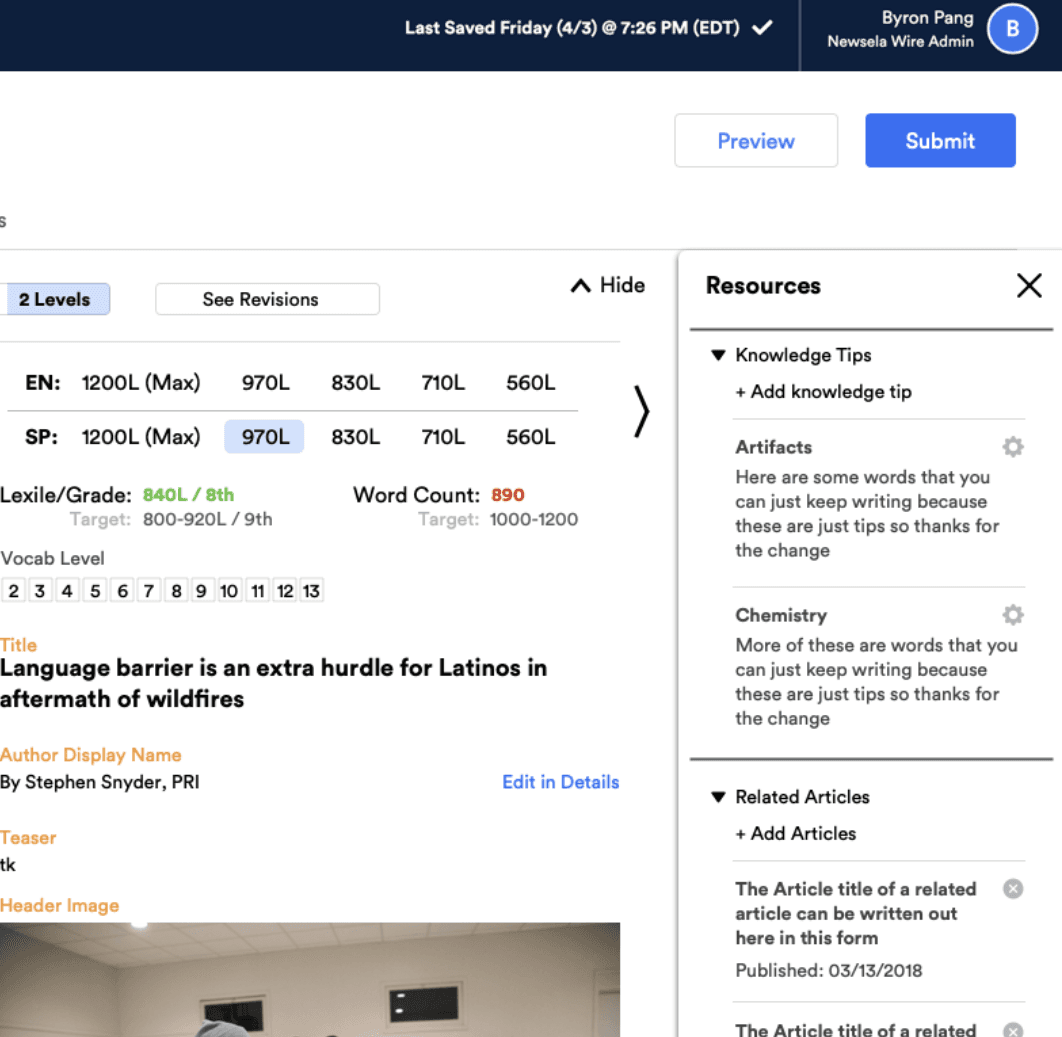
AI suggestions at varying levels of the creation process, with explanations for each option
Modular Content Architecture
Articles were treated as assemblies of atomic content blocks rather than fixed templates. This allowed for new types of articles, assessments, and important features such as answer reasoning.
Impact: Enabled entirely new content formats without redesigning the system.
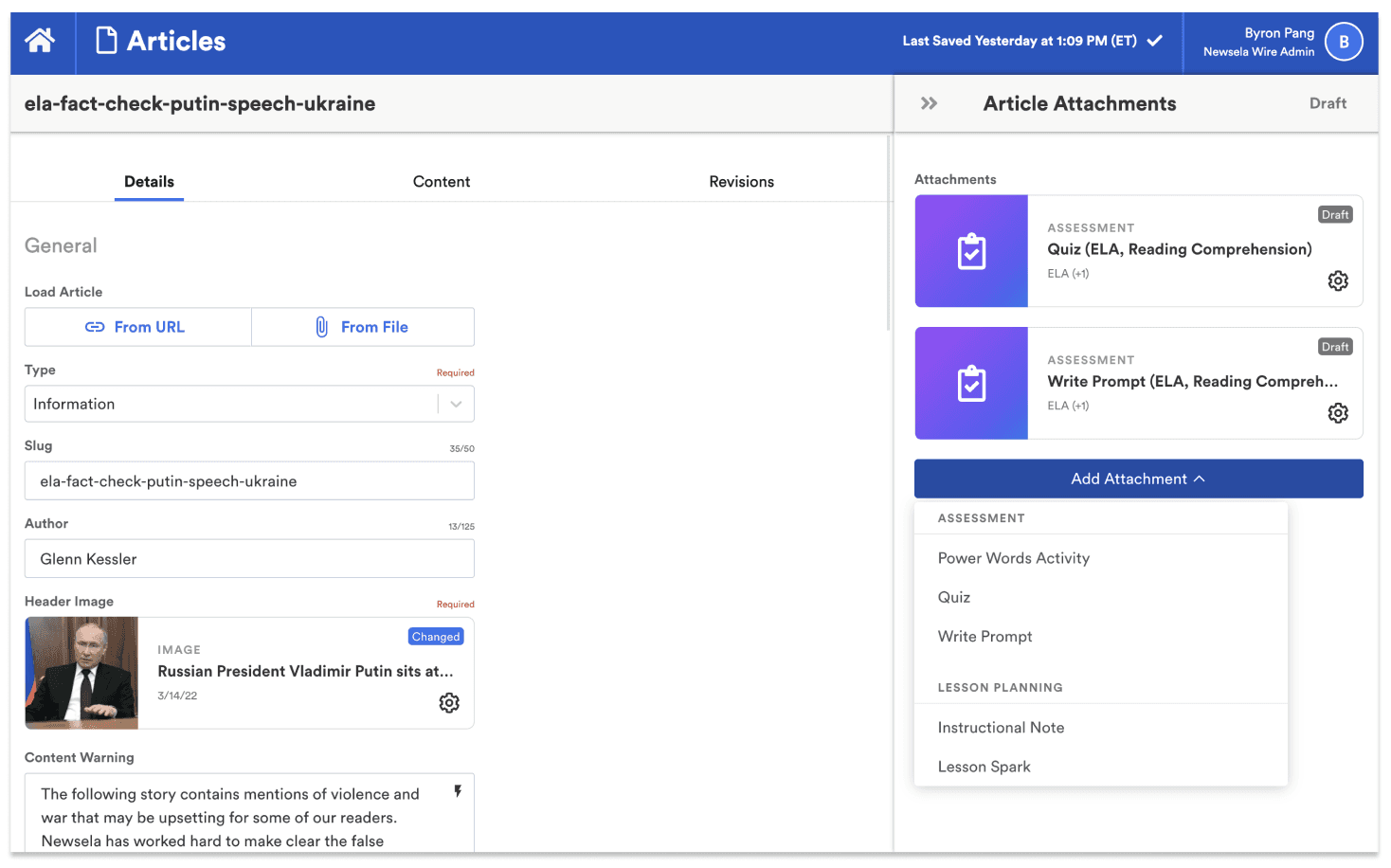
Each campaign version can be edited independently
Reflections
Collaboration & Tradeoffs
The hardest part of this work was not visual design—it was negotiating tradeoffs.
Key challenges:
Aligning with engineering on complex interaction patterns
Advocating for comparative workflows despite perceived complexity
Balancing how much reference material users needed without overwhelming them
Designing within legacy constraints without locking the system into them
These decisions required consistent research-backed communication to justify why certain complexities were necessary.
What I'd do differently
With hindsight, I would prioritize smaller, high-impact improvements earlier, while still aligning them to the long-term system vision. This would have created faster momentum and earlier wins while continuing to build toward the future state.
Takeaways
What I learned through this process
Complex internal tools benefit most from systems thinking
Comparative workflows, while complex, can be essential when grounded in user reality
Mapping design decisions to research accelerates cross-functional buy-in
Shared sources of truth are critical when tools span multiple teams and surfaces