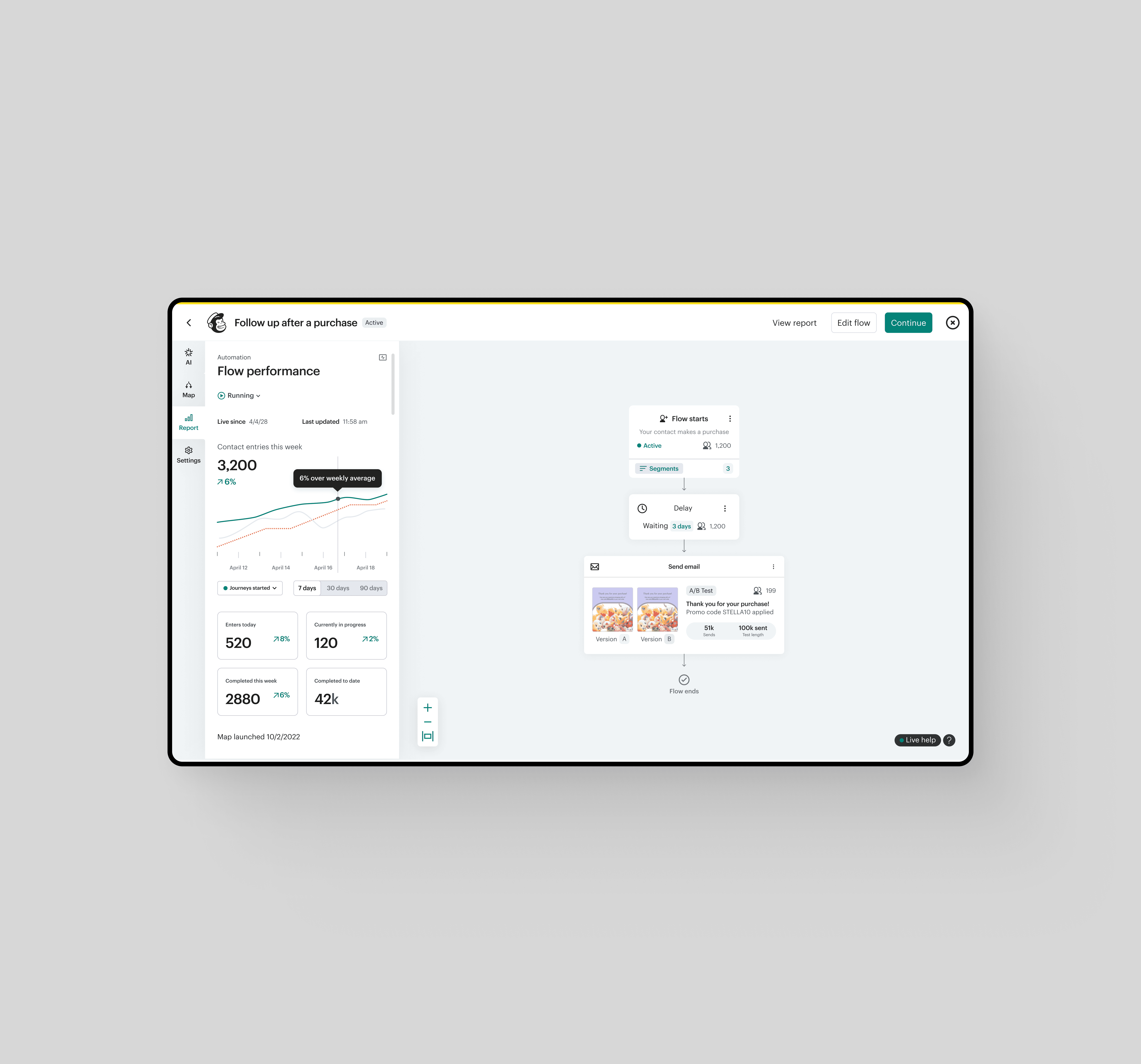
Overview
Owned feature design and workflow improvements for a core marketing product, while driving UI standardization across the experience
Role
Product Designer
Team
Product Designers (2)
Product Manager
Engineers (6)
Company
Mailchimp
Timeline
2022 - 2024
Key contributions
Ideation, testing, and refinement of designs for engineering handoff
Collaboration with engineering & product to balance ideal user experience with technical limitations and ensure timely delivery to meet deadlines
Design sessions, feedback, and review with a fellow designer to delivery quality work and manage a large quantity of initiatives
Problem
Continual, rapid improvements to meet evolving customer needs
Initiatives came about through the need for UX improvements, features to meet market expectations, addressing friction points, and reducing overall churn.
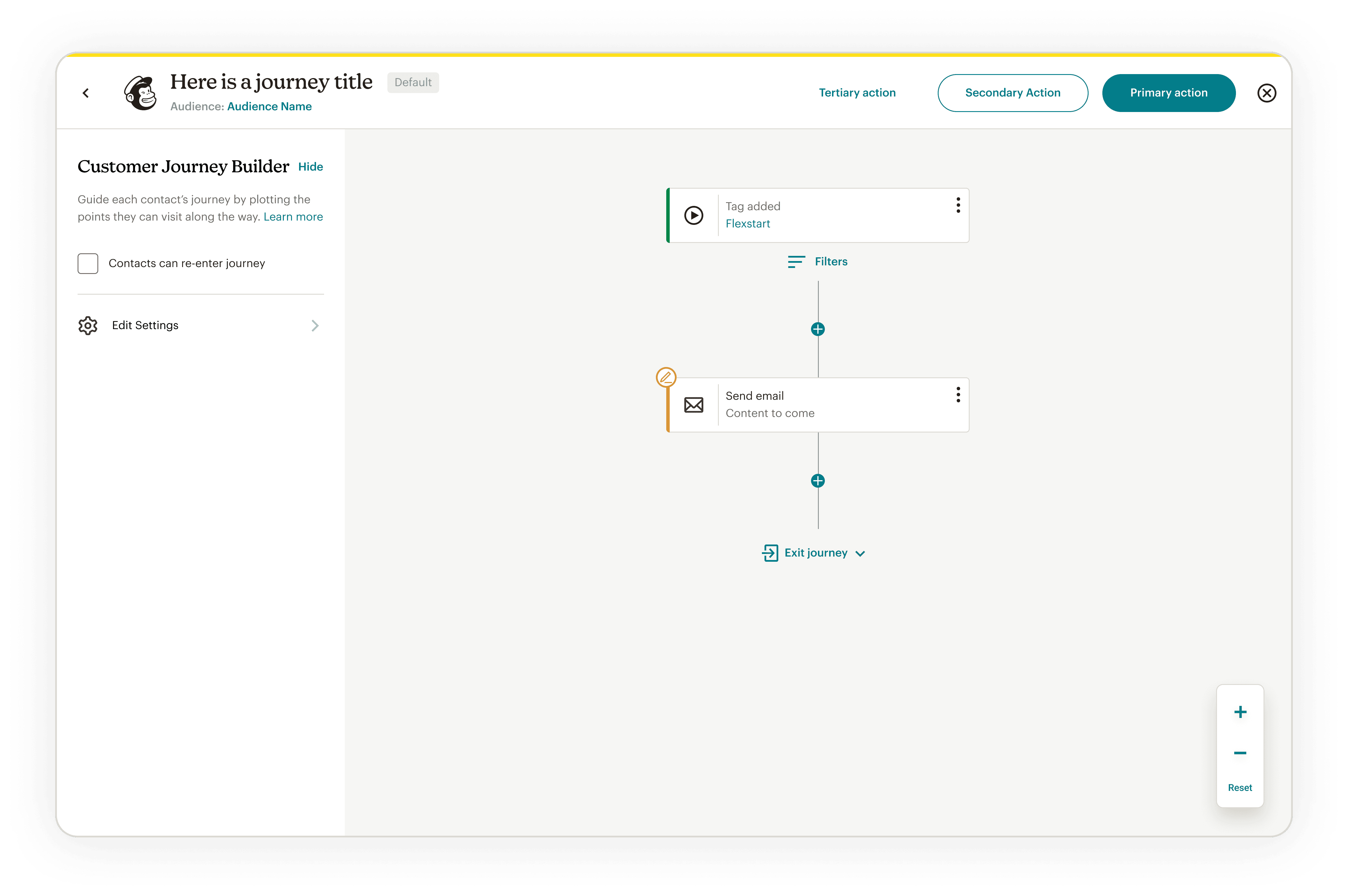
The old experience for creating automations
Key metrics
To measure the success of features added, we monitored the following metrics.
Creation rate - how often users would start an automation
Create to completion rate - how often users would turn a draft automation on
Abandonment rate - how often automations are turned off & paused
Research
Grounding decisions in reason
Determine the appropriate amount of research, whether it required simply citing essential UX principles, to finding past research decks, to moderated interviews. The goals were always to maximize confidence through understanding, while also fitting it into the required timeline for delivery.
Moderated interviews
Past research archives
Current usage data analysis
Competitive research
Heuristic walkthrough
Concept & usability testing
In product A/B testing
Usability best practices
Card sorting
Customer service tickets
initiatives
Gaining confidence on foundational decisions & navigating tradeoffs with product & engineering
Key decisions that had large experience & engineering implications needed to be made backed by qualitative & quantitative data.
User insights, team empathy, & goal alignment helped decide what compromises to make between design, product, & engineering.
Initiative 1
Pause & Edit Steps
Before users would need to pause entire automations to make edits. This was a source of frustration and ultimately risk of missing users who should have entered the flow during this time.
This issue was uncovered & validated through user interviews & presented as a pain point to prioritize.
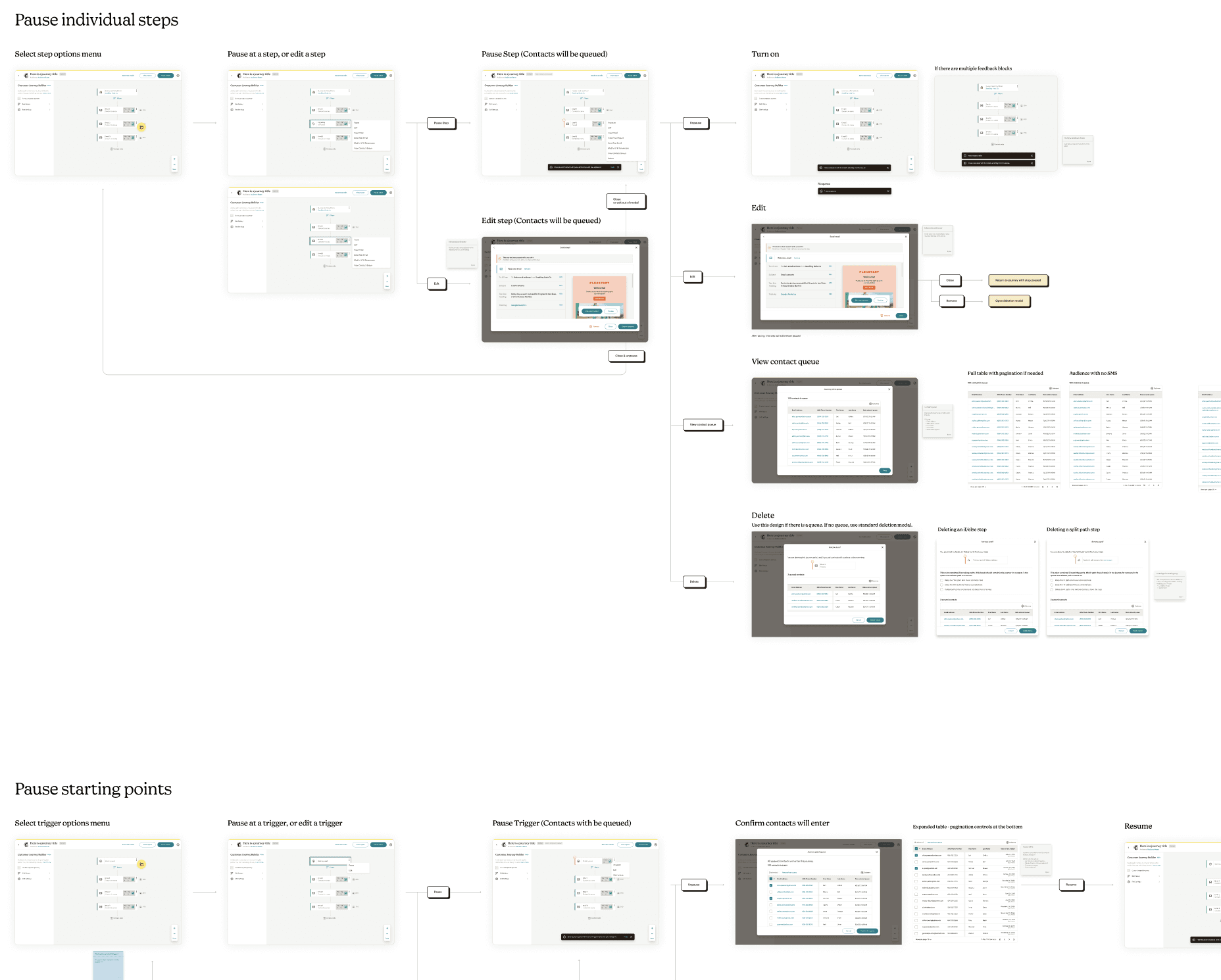
Experience walkthrough documentation

Flow documentation
Initiative 2
Filtering Audience Segments
Some initiatives don't need to be on a roadmap to create usability improvements.
We observed users wanting to see their audience filters, but needing to pause and edit the journey to view this. I initiated a lightweight solution to easily view audience filters to be delivered in one sprint.
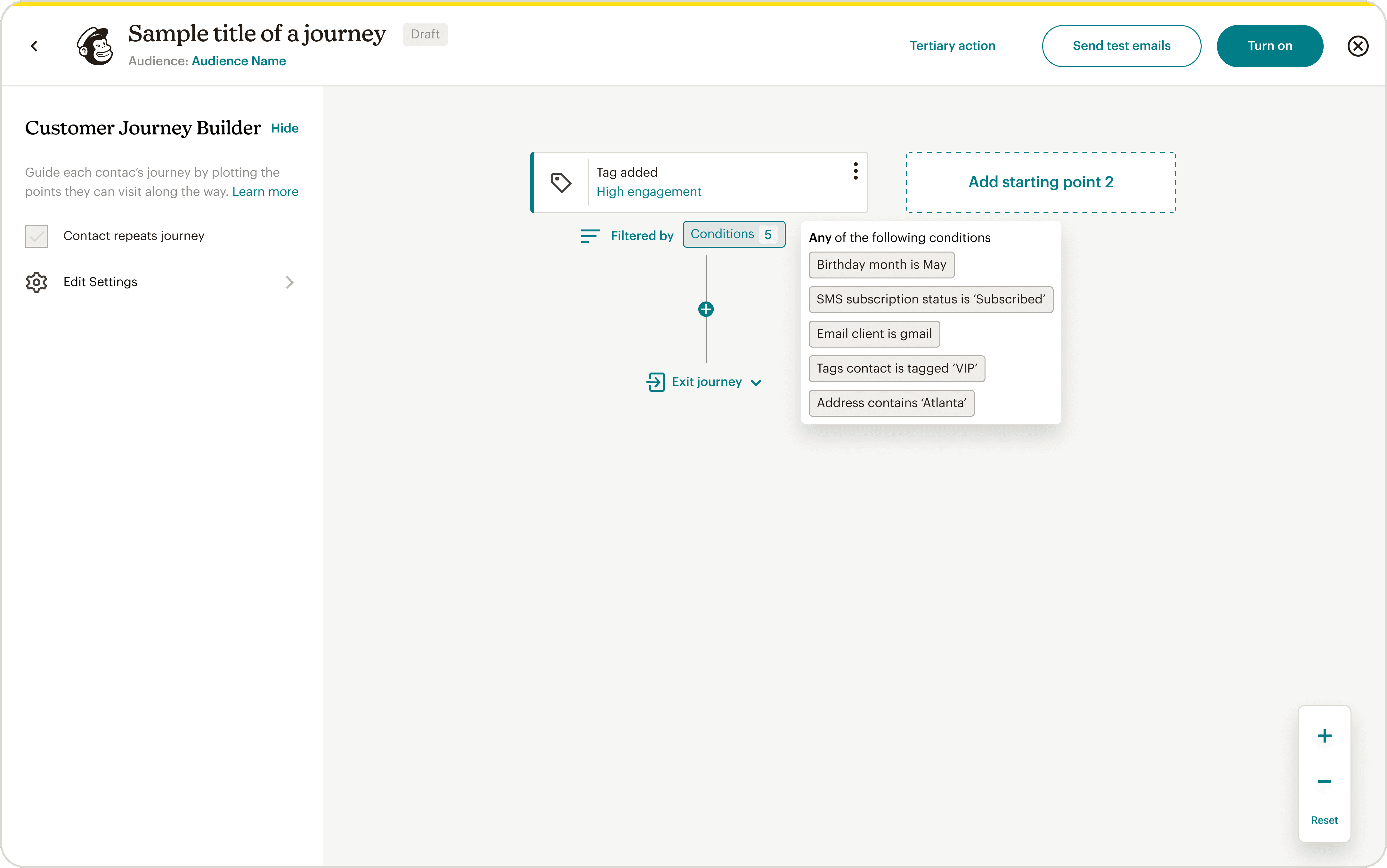
Utilizing simple to implement patterns for low effort, high impact features
Initiative 3
Convert from Outdated Tooling
Users needed to convert from old to new systems, and this initiative required in depth user & technical deep dive to ensure a seamless transition.
I led interviews to understand concerns & motivations that kept a user from converting. From this, designs were created to meet these.
I deep dived with the engineering team to understand the capabilities & limitations in the conversion process, and either help set user expectations or advocated for engineering spikes for features that were essential for users.
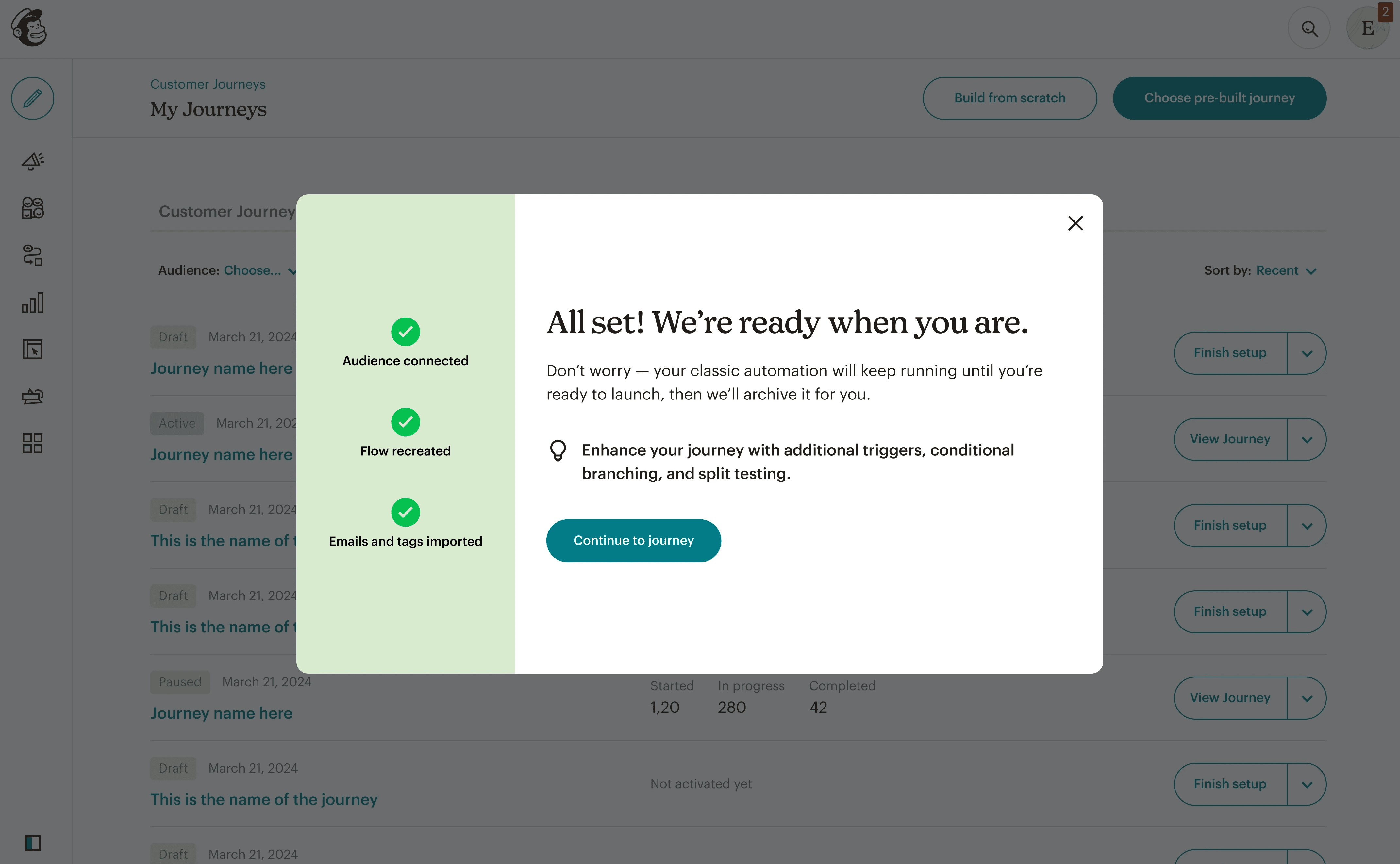
Addressing customer concerns about conversion
Initiative 4
Aligned Design System
Upon joining the team, I recognized the importance of having a design system to ensure consistency and reduce decisions making from an experience and technical perspective.
I took initial lead in creating an improved design system for this part of the product to bring structure and guidance to patterns, as well as update the UI to align with Mailchimp's design language.

Creating guidance and uniformity
impact
Tracking key metrics
During my time working on this part of the product, we saw the following improvements:
Creation rate:
19% increase in journey creations
Completion rate:
7.5% increase in draft to live journey conversions
Abandonment rate:
20% reduction in indefinitely paused and deleted journeys
Reflection
Empathy & Proportionate Research
Instilling empathy within the team
Understanding what resonates with the team to gain empathy for the user helps motivation and ideation. Methods such as pulling user quotes, bringing up videos of users walking through the product, and having the team walk through the product to perform specific tasks were critical in gaining buy in from the team for certain initiatives.
balanced research
When working in a fast paced team, determining the right balance of research was key. Sometimes, design intuition and reference past research or usage data is enough. Other times, dedicating a sprint to in depth research is needed to gain confidence and reduce risk.